Real-time soil nutrients, in the field

Find the yield your grid sampling is averaging away.

We measure nutrients in ppm every 80 feet, revealing deficient areas and stratification that core sampling averages away. Feed this data into your prescription software so your applicator can finally treat every part of the field with the resolution it needs.

Farm in Iowa? Request an on-farm demo this fall →

Potassium nutrient map (ppm, Ammonium Acetate) resolving…
very low → low → optimal → high → very high
This is one field's potassium measurements. Toggle between a 2.5-acre grid and TerraBlaster's 80-foot resolution to see the deficient pockets a 2.5 acre grid average hides, and the places where excess fertilizer is being wasted.
Source: TerraBlaster Inc. · Field measurement, 2025
See the full field case study, including the $/acre impact
What ag retailers and agronomists are saying

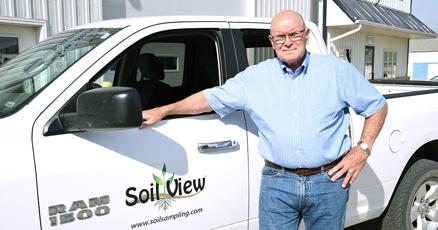
“The TerraBlaster LIBS system will quickly become a game changer in applied nutrient management.”

Craig Struve
Craig Struve, CEO, SoilView · TerraBlaster investor
SoilView

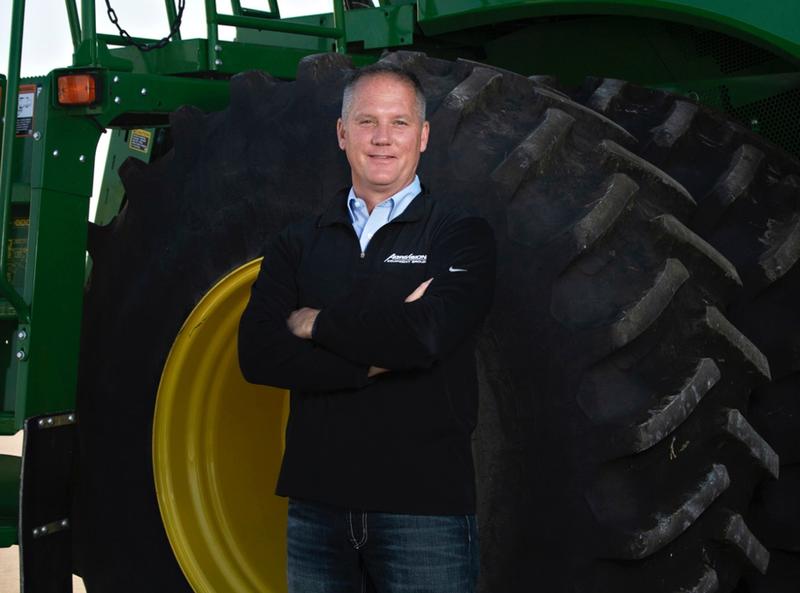
“The TerraBlaster team has the vision, industry expertise, and relentless execution to turn their amazing technology into a transformative company.”

Jeremy Ostrander
Jeremy Ostrander, CEO, AgriVision Equipment and PrairieLand Partners · TerraBlaster investor
AgriVision Equipment Group / PrairieLand Partners
The Blaster 1000

Know more. Grow more.

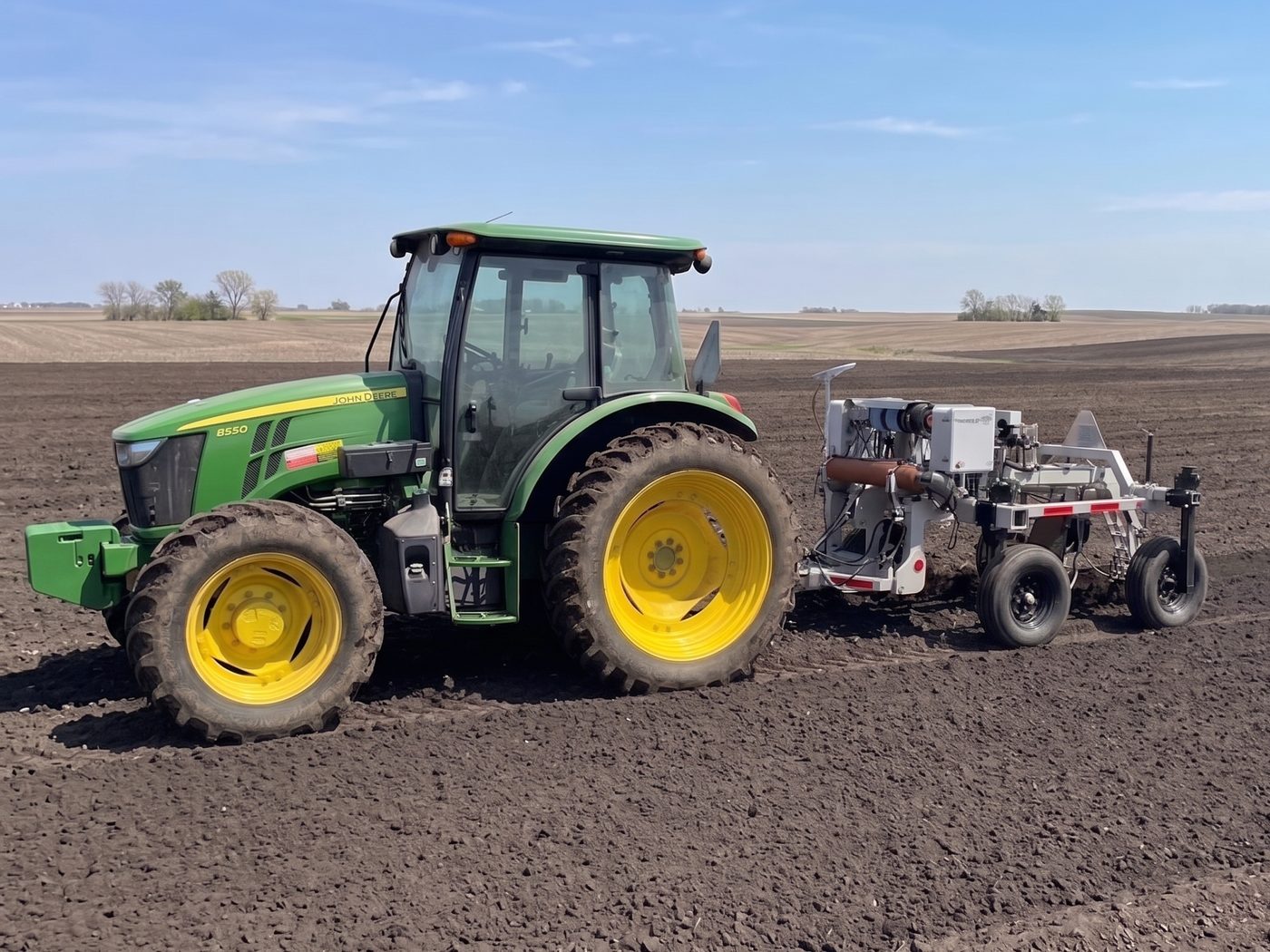
A towed implement that measures soil nutrients in real time, in the field, at up to 6 mph, and hands the reading to your agronomist on the spot, in the format they already work in.

One pass. The full nutrient picture.

The unit opens a shallow trench and takes roughly twenty measurements per second, averaging over distance instead of stopping to pull cores. You get results within minutes in a format that drops straight into the variable-rate workflow you already run. No cores, no parallel sampling, no lab in the loop. The Blaster 1000 uses a proprietary Laser-based sensor that measures the soil directly, so the numbers you get are accurate, not values inferred from a handful of samples pulled somewhere else in the field.

Blaster 1000 Blaster 1000 towed behind a tractor in a field, real unit in the field
Measures
  • P (ppm)Mehlich-3, Bray P1, or Olsen equivalents
  • K (ppm)Ammonium Acetate or Mehlich-3 equivalents
  • pHboth water 1:1 pH and salt pH (0.01 M CaCl2) available
  • Buffer pHSikora
  • Organic Matter (%)
  • CEC (meq/100g)Cation Exchange Capacity
  • Texture%sand, %silt, %clay
  • Nitrate-N (ppm)
  • Ammonium-N (ppm)
  • Moisture (%)
  • Total N (%)
  • Total C (%)
  • Total Organic Carbon (%)TOC
  • Zn (ppm)DPTA or Mehlich-3
  • Cu (ppm)DPTA or Mehlich-3
  • B (ppm)hot water or Mehlich-3
  • Mn (ppm)DPTA or Mehlich-3
  • S (ppm)Mehlich-3
  • Ca (ppm)Mehlich-3
  • Mg (ppm)Mehlich-3
  • Base saturation (%)
  • Fe (ppm)DPTA or Mehlich-3
  • Na (ppm)Mehlich-3
  • Al (ppm)Mehlich-3
  • EC (dS/m)1:1

All of the above can be measured and mapped at 6 depths (1", 2", 3"... 6") simultaneously and combined to provide a 0-6" depth measurement equivalent to standard soil cores.

Learn more

Why it pays

Put the right amount in the right place, everywhere.

01

Target nutrients precisely

Fertilizer is the largest input expense for most farmers. Make sure you're putting the right amount in the right place, everywhere. Every value is reported in ppm against a named extraction method, so it drops into your fertility equations exactly like a lab result.

02

Results within minutes of finishing the field

Get results quickly so you can start addressing fertility problems right away.

03

4x faster than manual soil sampling

The unit opens a shallow trench and takes roughly twenty readings per second, averaging over distance as you drive at 6 mph instead of stopping to pull cores. Slash labor costs and time while capturing more information.

04

Works with your existing variable-rate process

TerraBlaster's results are delivered in a format that fits traditional soil sample workflows. No need to change your fertility Rx process.

05

Know where micronutrients are limiting yields

Cost-effective micronutrient testing allows easy decisions on whether to apply them.

06

A prescription for confidence

Complete information about a field's variability so you can precisely understand the fertility needs and increase the return on fertilizer investment.

Our mission

On a mission to make every bushel more efficient.

Real precision means better-placed fertilizer, so every pound lands where it can generate more yield and better ROI. Our soil nutrient data improves your prescription map so you can apply nutrients exactly where they're needed, with no extra work, so there is more yield, less cost, less time, and better input ROI in every bushel that leaves the field. That's precisely how we build the future of agriculture.

About Us

Straight answers

The questions we get asked.

What does it measure?+

We're launching with a set of highly accurate measurements for the primary nutrients prescriptions are built for today: P, K, pH and buffer pH (for lime recommendations), organic matter, CEC, Ca, Mg.

We also report many other nutrients and properties, and will be adding more over time. See our full list here.

How does the accuracy compare to a lab?+

On our highly accurate nutrients, TerraBlaster correlates with lab values about as closely as two labs correlate with each other. We report absolute concentrations in ppm against named extraction methods, so results can be compared directly against any lab report you already hold. If you want to see a TerraBlaster map next to your own lab results on your own field, we will run that comparison with you.

Do I need new application equipment?+

No. TerraBlaster produces the same data format you get from traditional soil sampling and soil labs. The variable-rate equipment you run today can take advantage of them.

What about nitrogen?+

Our initial focus has been on the measurements that drive variable-rate application today, and we produce lab-quality results for the measurements needed to prescribe phosphorus, potassium, and lime. We also report nitrate-N and ammonium-N, and results are good and improving.

Why does resolution matter if I already grid sample?+

A 2.5-acre grid reports a single value for the entire area. Inside a 2.5-acre area that reads as adequate, there are frequently high and low-nutrient pockets large enough for an applicator to address. A single value hides them. That is the yield, and the profit, you are leaving in the field. We estimate this can be over $35 per acre.

Do I still need to pull soil samples?+

No. TerraBlaster measures the soil directly with a laser, twenty times per second, as the implement drives and our proprietary sensor is very accurate. There is no parallel core sampling and no lab step. The map is built from measurements taken at each point in the field, not extrapolated from a few samples. Growers and retailers often run lab samples alongside their first TerraBlaster pass to build confidence in the numbers, and we encourage that. It is a validation exercise, not a requirement of the system.

How can I use stratification measurements?+

For stratification measurements we report nutrient concentrations at 0-1", 1-2", 2-3", 3-4", 4-5", and 5-6", in addition to the overall 0-6" value. If your field shows substantially different nutrient levels at different depths, work with your agronomist to optimize it. That might mean knifing in nutrients with a strip tiller, shifting to different nutrient formulations that are more mobile, or increasing tillage in certain areas.

I'm an Agronomic Service Provider (or an Ag Retailer). Where do I fit?+

At the center. TerraBlaster is a measurement tool, not an agronomy service. What we provide is a higher-resolution version of the soil data you already build plans from, delivered in the same format, so the expertise you have built over decades gets a much sharper picture of the field to work from.

Fall 2026 demos · Spring 2027 delivery

A few beta systems left.

We are running demos with growers and retailers across the Midwest this fall, on their fields and against their own lab results. What we learn there goes directly into the beta systems that will be shipped in spring 2027. A handful of slots remain for partners who want to participate.

Farm in Iowa? Request an on-farm demo this fall →